Order Online

Our story

From farm to cup

We started with one question: what does coffee taste like when nobody along the way is in a hurry?

Three chapters
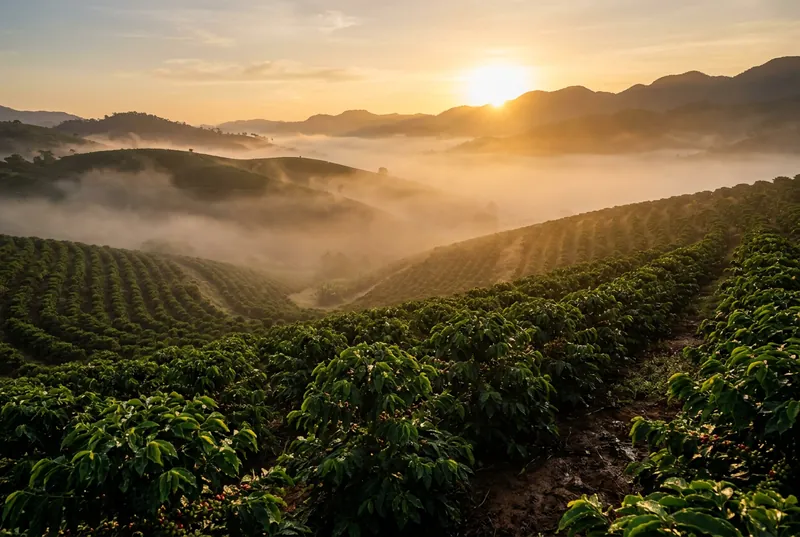
A misty coffee plantation on rolling hills at sunrise

01The farm

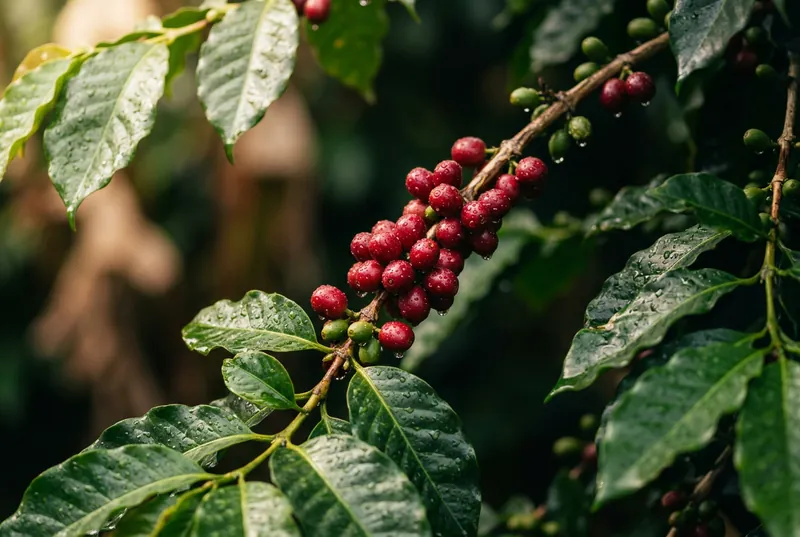
Ripe red coffee cherries on the branch

Picked by hand

Coffee is a fruit. On the farms we buy from, each cherry is picked only when it turns red, and the same tree is visited five or six times a season.

We work with three producers and visit each of them every year. Prices are agreed before the harvest, so a bad season is shared and a good one is too.

3
Producers
1,900 m
Average altitude
100%
Traceable

02The roast

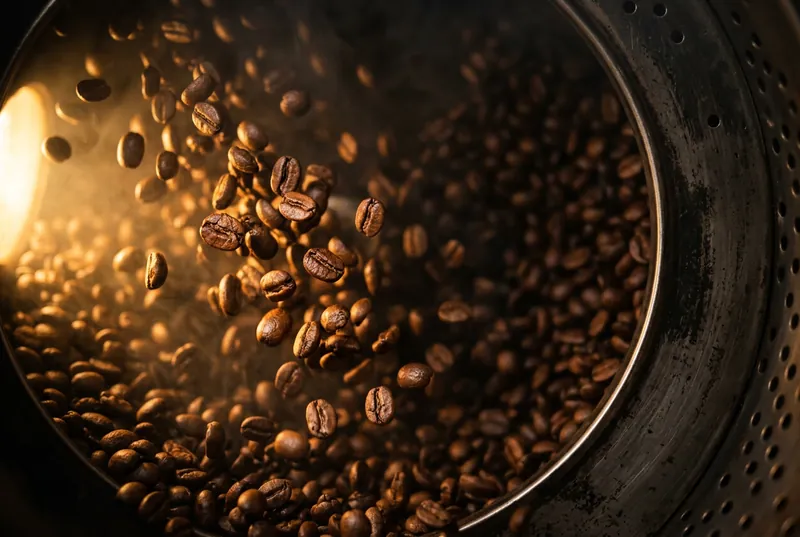
Coffee beans tumbling in the roaster drum

Roasted by ear

Twelve kilograms at a time, twice a week. Around the ninth minute the beans begin to crack, a sound like rain on a tin roof.

From there, thirty seconds decides everything. We stop early. Our roasts are lighter than most, because we would rather you taste the farm than the fire.

12 kg
Per batch
11 min
In the drum
7 days
Rested

03The cup

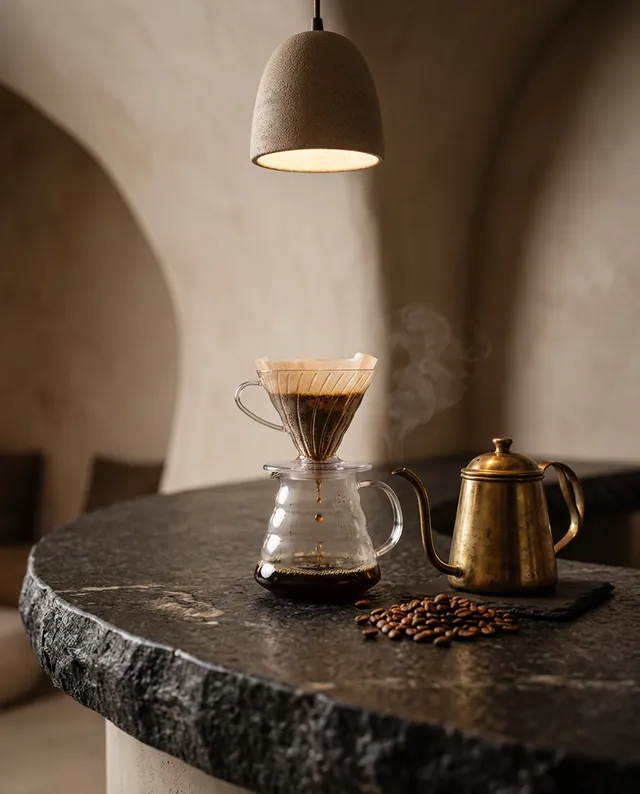
A pour-over dripper and brass kettle on the stone bar

Poured in time

Every coffee is weighed, timed and tasted before it reaches you. A pour-over takes four minutes. We do not make it take three.

The room was built for those four minutes. There is a seat, a window and nothing you need to do.

15 g
Coffee
250 g
Water
4 min
Patience
We would rather you taste the farm than the fire.
The roastery, on stopping early
A cup of black coffee on a stone ledge beside the round window

What we hold to

Four quiet rules

Nothing here is complicated. We buy well, roast gently, serve carefully and leave the place better than we found it.

See the space

Our beans

Three origins,
one belt

All coffee grows between the two tropics. Ours comes from three places along that line, each chosen for what it adds to the cup.

Map of the coffee belt showing our three origins: Huila in Colombia, Cerrado Mineiro in Brazil and Yirgacheffe in Ethiopia Tropic of Cancer Equator Tropic of Capricorn Huila, Colombia Cerrado Mineiro, Brazil Yirgacheffe, Ethiopia

Ethiopia

Yirgacheffe

Jasmine, bergamot, apricot

Altitude
1,950–2,200 m
Process
Washed
Variety
Heirloom
Used in
Filter, pour-over

Colombia

Huila

Red apple, panela, cocoa

Altitude
1,700–1,900 m
Process
Washed
Variety
Caturra, Castillo
Used in
House espresso

Brazil

Cerrado Mineiro

Hazelnut, milk chocolate, dried fig

Altitude
1,000–1,250 m
Process
Natural
Variety
Yellow Bourbon
Used in
House espresso, cold brew

The last chapter is yours

Taste the difference